If you live anywhere in Europe, you probably use your card almost every day. You tap it for coffee, groceries, train tickets, online shopping — and the payment goes through instantly. It feels simple.
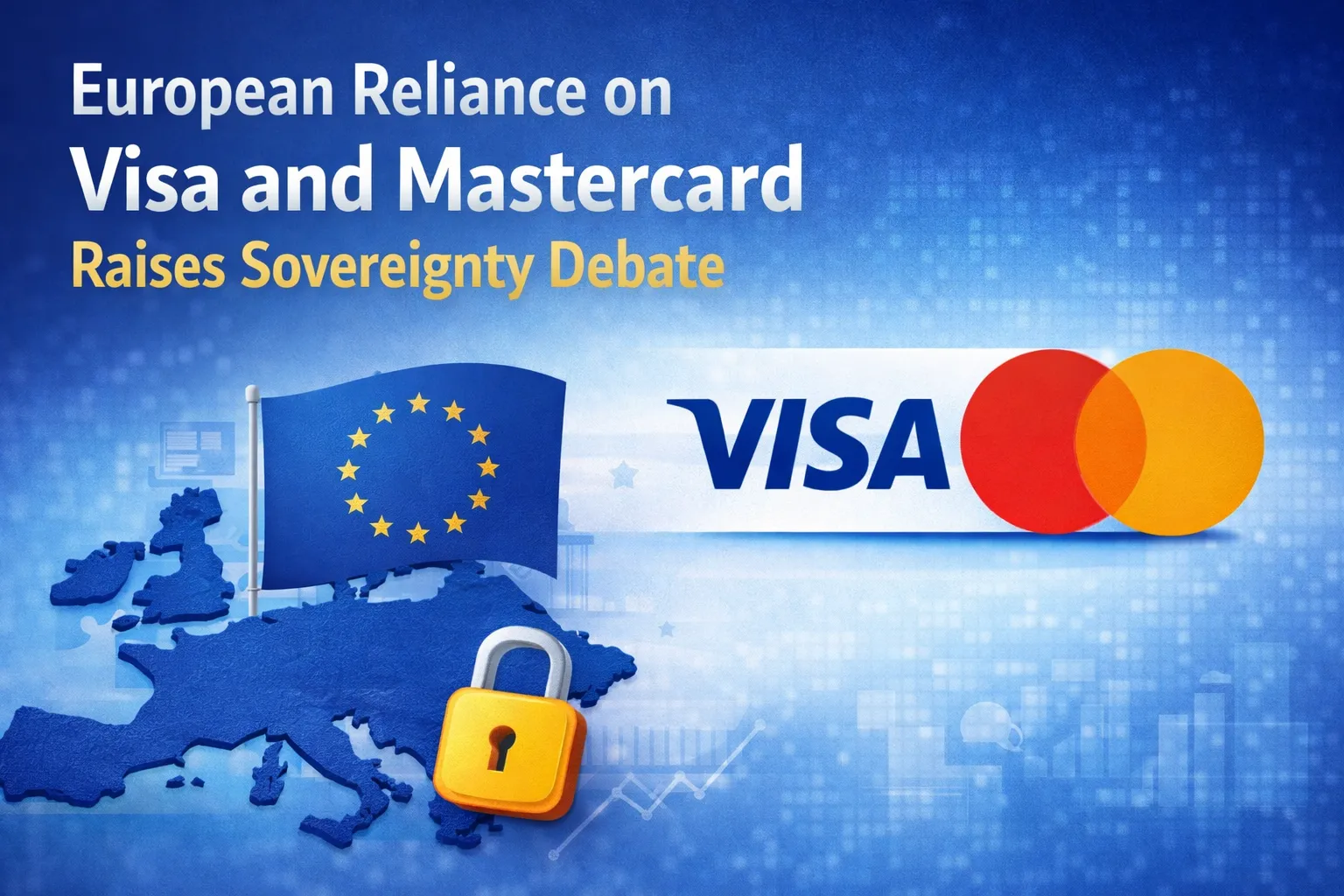
But behind that simple tap, two American companies are doing most of the work: Visa and Mastercard.
For years, Europe has relied heavily on these two payment giants. And now, that reliance is starting to raise bigger questions.
How Did Visa and Mastercard Become So Dominant in Europe?
The answer is partly history and partly convenience.
Visa and Mastercard built massive global payment networks long before digital payments became the norm. European banks partnered with them because they offered:
- Reliable global infrastructure
- Strong fraud protection systems
- Easy cross-border payments
- Worldwide acceptance
As online shopping grew and travel between EU countries increased, having a system that worked everywhere became essential. Visa and Mastercard already had that global reach.
Over time, they became deeply embedded in Europe’s financial system.
Today, a huge percentage of card transactions across the European Union run through one of these two networks.
Why Is This Becoming a Concern Now?
For everyday consumers, everything works smoothly. So what’s the issue?
The concern isn’t about performance — it’s about control and independence.
Both Visa and Mastercard are US-based companies. That means critical parts of Europe’s payment infrastructure are technically under foreign corporate and regulatory influence.
In normal times, this doesn’t seem like a problem. But in periods of geopolitical tension, trade disputes, or regulatory conflicts, dependence on external systems can become a vulnerability.
European policymakers are starting to ask:
- What happens if rules change outside Europe?
- Should such an important financial system be controlled elsewhere?
- Is Europe too dependent on non-European technology providers?
These questions are part of a broader push for “strategic autonomy” in Europe — not just in payments, but in technology, energy, and digital infrastructure.
The Bigger Picture: Financial Sovereignty
Payment systems are more than just tools for shopping. They are part of a country’s financial backbone.
Control over payment rails affects:
- Economic stability
- Sanctions enforcement
- Cross-border trade
- Banking competitiveness
- Data governance
If most transactions flow through companies headquartered outside the EU, Europe has limited influence over how those systems evolve.
That’s why the topic has moved from technical discussions to political conversations.
Are There European Alternatives?
Europe isn’t starting from zero.
Some countries already have local card systems, but many of them don’t work seamlessly across borders. That’s where Visa and Mastercard still have the advantage — they operate globally.
To reduce reliance, Europe is exploring several ideas:
1. Stronger EU-Wide Payment Networks
Banking alliances have discussed building a unified European card scheme that could compete with global players.
2. Instant Bank Transfers
Systems like SEPA instant payments allow direct transfers between bank accounts without needing card networks.
3. A Digital Euro
The European Central Bank is studying the idea of launching a digital euro — a central bank-backed digital currency that could provide more direct control over digital payments.
However, building something that rivals Visa and Mastercard is not easy. It would require:
- Massive investment
- Coordination across EU member states
- Consumer trust
- Retail adoption
And most importantly, time.
Why This Debate Matters Now More Than Ever
Cash usage in Europe continues to decline. Digital wallets, contactless payments, and online shopping are becoming standard.
The more digital payments dominate daily life, the more important it becomes to ask: who controls the infrastructure behind them?
Europe’s reliance on Visa and Mastercard isn’t an immediate crisis. But it’s part of a larger strategic discussion about independence in an increasingly digital world.
What Does This Mean for Consumers?
For most people, nothing changes today.
Your Visa or Mastercard will still work. Payments will still process in seconds. Security protections remain strong.
But behind the scenes, governments and financial institutions are thinking long-term.
The goal isn’t to remove Visa and Mastercard overnight. It’s about balance — ensuring Europe has alternatives and stronger control over its own financial future.
Final Thoughts
Visa and Mastercard helped power Europe’s transition into a digital economy. Their networks are efficient, secure, and globally trusted.
But as the world becomes more interconnected — and sometimes more divided — reliance on foreign financial infrastructure naturally becomes a strategic issue.
The conversation isn’t about panic. It’s about preparation.
And in today’s digital age, preparation matters.