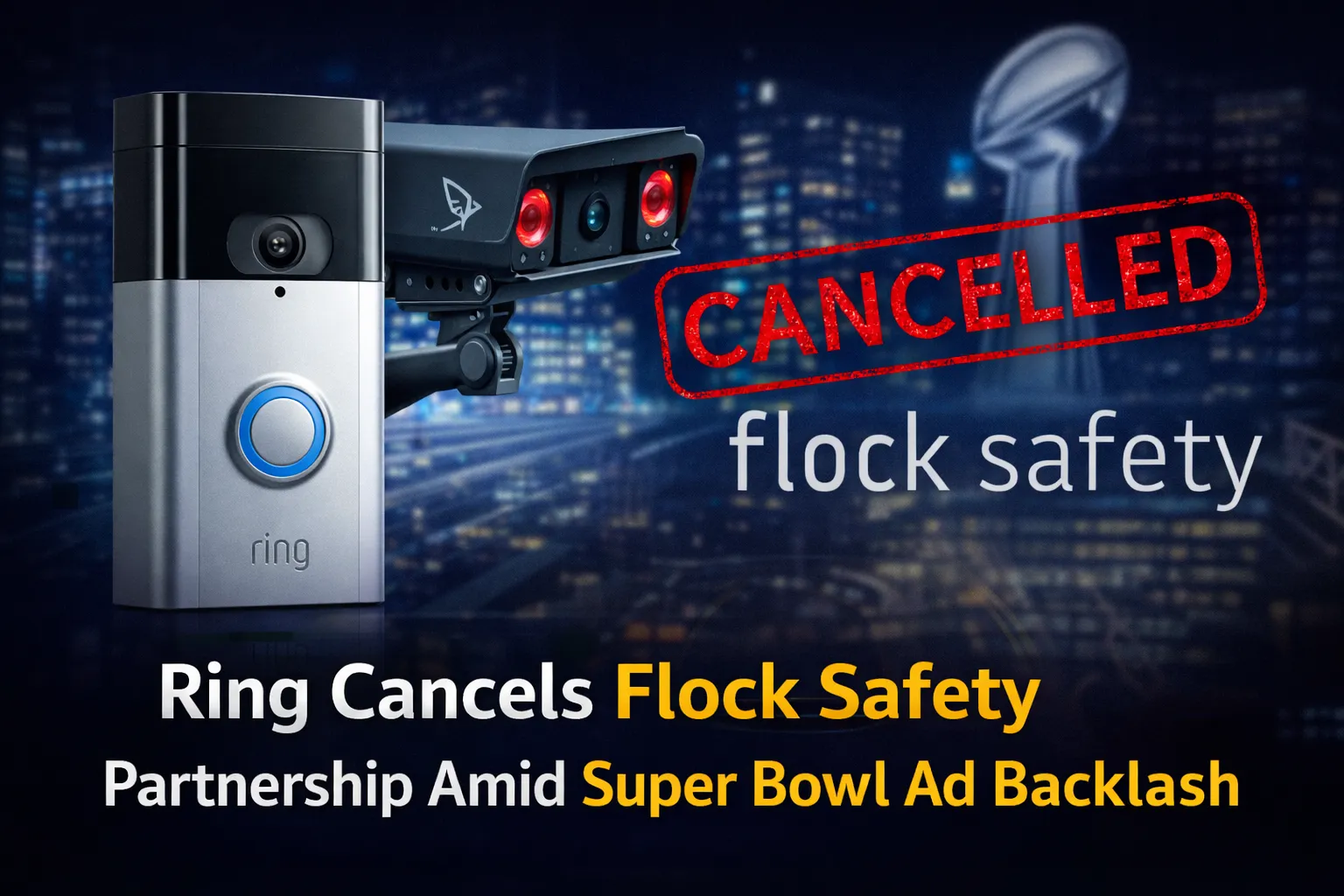
Amazon’s smart doorbell brand Ring has officially canceled its planned partnership with surveillance technology company Flock Safety after intense public criticism sparked by a controversial Super Bowl ad that aired during Super Bowl LX. The decision highlights rising concerns over privacy and the use of consumer surveillance tools in law enforcement and broader monitoring systems.
Backlash Over Super Bowl “Search Party” Ad
The controversy began with a 30-second Ring commercial broadcast during America’s most-watched sporting event, which showcased its new AI-powered “Search Party” feature — marketed as a tool to help locate lost pets by using footage from neighboring Ring cameras. Although the feature was positioned as a positive community benefit, many viewers and privacy advocates saw the portrayal as eerily reminiscent of a “surveillance state.”
Critics, including lawmakers and organizations like the Electronic Frontier Foundation, warned that even well-intentioned AI-enabled camera networks could be repurposed to track people, not just pets, raising fears about unchecked monitoring and data exploitation.
What the Ring-Flock Safety Partnership Was
Ring and Flock Safety had been developing a collaboration to integrate Flock’s evidence management platform with Ring’s Community Requests system. The plan would allow Ring users to voluntarily share camera footage with law enforcement in response to active investigations using Flock’s tools.
However, according to statements from both companies, the initiative never actually launched, and no Ring customer videos were ever shared with Flock Safety. The cancellation was described as a mutual decision following a comprehensive review, with Ring citing technical and resource challenges as primary factors.
Statements from Ring and Flock
In a joint announcement, Ring and Flock confirmed the partnership’s termination but emphasized that it was not operational:
“Following a comprehensive review, we determined the planned Flock Safety integration would require significantly more time and resources than anticipated,” Ring said in a statement. “The integration never launched, so no Ring customer videos were ever sent to Flock Safety.”
Flock repeated that end users’ privacy was intact, explaining the decision allows both organizations to focus better on their core objectives and customer bases.
Privacy Concerns Remain at the Forefront
Although Ring’s official announcement did not explicitly link the cancellation to the Super Bowl backlash, privacy and surveillance concerns were unmistakably central to public reaction. Critics pointed to Flock Safety’s deployment of automated license-plate readers and its controversial history working with local law enforcement — including reports of data usage that skirted privacy protections — as part of the broader unease.
Senator Ed Markey (D-Mass.) and other advocates have raised alarms about Ring’s existing facial recognition tools and the implications of combining such capabilities with sprawling camera networks. Many called the ad itself a “dystopian” vision of technological overreach rather than a simple pet-finding feature.
What’s Next for Ring and Surveillance Technology
Ring maintains that its Community Requests feature — which lets users choose whether to share footage with authorities — will continue unchanged. The company reiterated its commitment to building safety tools while prioritizing transparency and customer trust.
However, the episode has reignited broader public debate over how much access law enforcement and private companies should have to consumer-generated data. As AI and camera integration proliferate across smart home ecosystems, Ring’s decision could influence how similar partnerships are approached by tech companies in the future.